
Personal protective equipment (PPE) is a must for many types of work. Still, it has always been a priority in the construction field. Every day on the work site poses more risks than your average job. That’s why a great foreperson is always on their workers to be equipped with the most effective PPE.
If you’re a foreperson trying to equip your workers with the tools to stay safe on the job, there are several types of construction PPE to consider. However, before we dive into those, let’s look at two factors that we must examine first.
Does construction PPE meet OSHA standards?
The Occupational Health and Safety Administration requires specific categories of PPE or the PPE must meet standards developed by the American National Standards Institute. Whether you’re supplying your employees with PPE or they have to provide their own, their construction PPE must meet these standards. The specific areas of PPE that must meet the ANSI standards are eye and face protection, head protection, and foot protection. If these PPE standards aren’t satisfied, you could see severe citations during OSHA inspections.
When is construction PPE necessary?
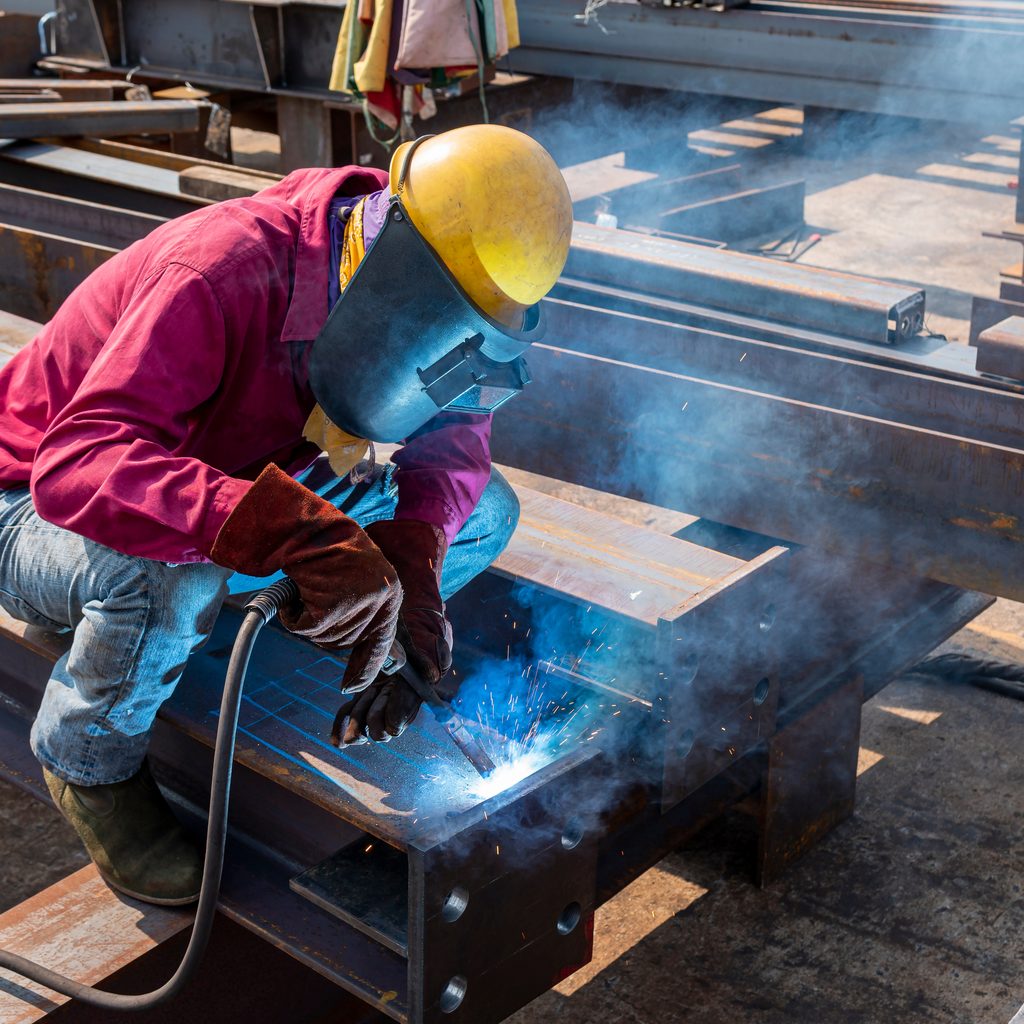
Different types of construction tasks all impose specific personal safety risks. Some PPE is specific to certain duties, while other types are used in multiple scenarios. For example, a welder needs to protect their eyes with a shield that has an approved ultraviolet light protection level. However, just because one person is welding on site doesn’t mean your whole team needs to wear the same PPE.
Before stocking up on PPE, take inventory of potential workplace hazards. There will be some level of general PPE equipment assigned to everyone. This type of PPE, such as a hard hat, is required of every construction worker, regardless of job duties. All PPE should fit well and be maintained so it lasts.
This is common sense for an experienced construction worker. However, it’s not uncommon for an administrative assistant or someone associated with the project who isn’t familiar with what PPE is necessary for what jobs and to order the same gear for everyone. This can lead to unnecessary costs.
To prevent this, clearly map out what PPE is necessary for which workers on a spreadsheet or some other document. The list below covers all the areas of PPE you’ll need to consider for your workers. Each category includes general and more specific PPE for specialized work.
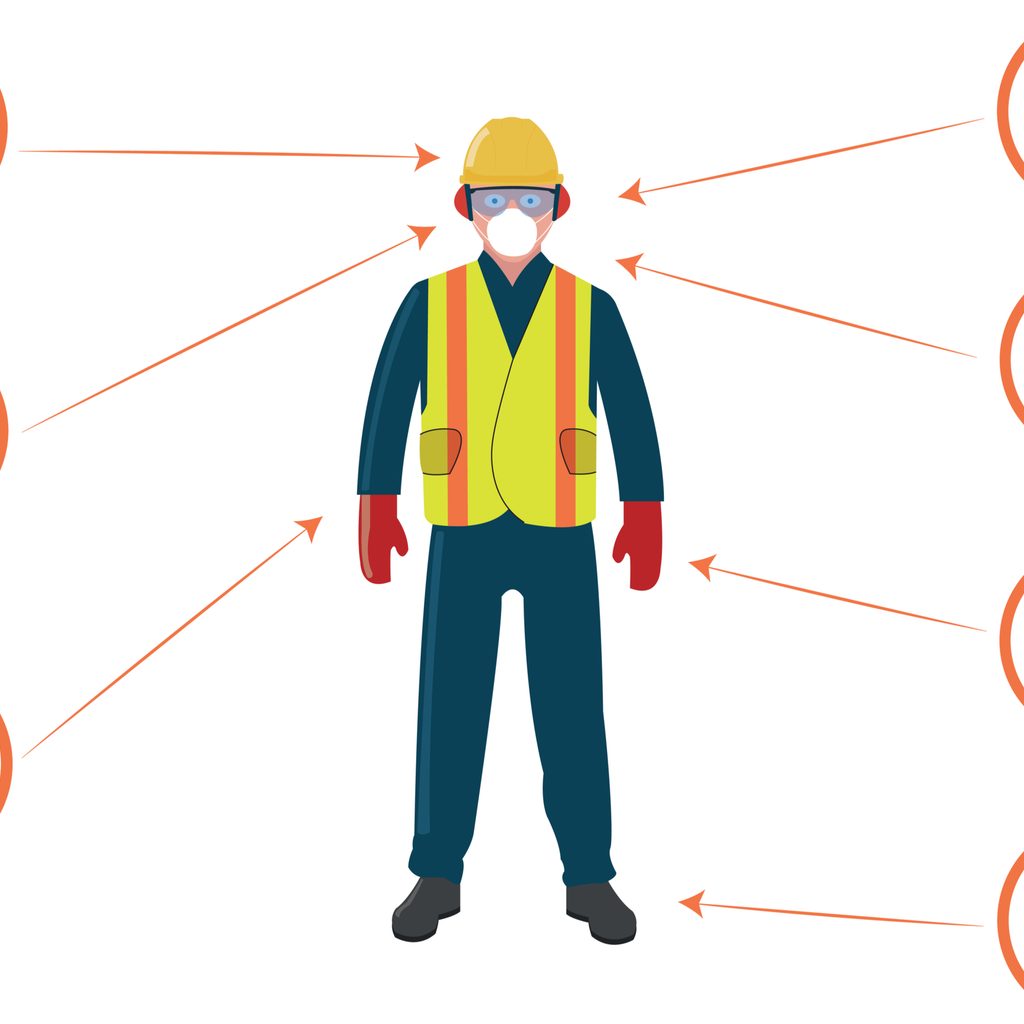
Body protection
Technically, all your parts combine to create your “body.” However, in the PPE world, body protection involves the torso. PPE under this category should protect workers from extreme temperatures, tools and machinery, hazardous chemicals, and molten metals. There are various leathers, wools, cottons, polyesters, and other synthetic materials that provide different forms of protection. Brightly colored, reflective vests that make employees visible also fall under body protection.
Head protection
Hard hats and construction workers have become ubiquitous because hard hats can save lives. This head protection is one piece of PPE that almost every construction worker is required to have, even the foreperson. Hard hats fall into one of three categories. Which category for your work site depends on the potential workplace hazards.
- Class A – Provides impact and penetration resistance along with limited voltage protection (up to 2,200 volts).
- Class B – Provides the highest level of protection against electrical hazards, with high-voltage shock and burn protection (up to 20,000 volts). It also provides protection from impact and penetration hazards by flying/falling objects.
- Class C – Provides lightweight comfort and impact protection, but offers no protection from electrical hazards.
Eye and face protection
The eye and face protection category has the most comprehensive range of variety based on potential hazards. Essential eye and face protection safeguards workers from dust, dirt, debris, metal and wood shavings, and several other potentially hazardous conditions. Other considerations are:
- Chemical splash back
- Ultraviolet light and electrical arcs
- Objects resulting from occupational mishaps, such as tree limbs or ropes
Hand and arm protection
There is a wide array of protection to consider when supplying hand and arm PPE. Construction workers need protection from extreme temperatures, chemicals, and electricity, and they need PPE that helps with grip assistance and abrasion resistance. Gloves made from leather, rubber, metal, or fabric, or the combination of one or more of these assists with hand and arm protection.
Foot and leg protection
The most common hazards where foot and leg protection come into play on construction sites are slipping and falling and crushed feet and toes. Anti-skid, steel-toe boots are best to avoid these issues. In some instances, protection against chemical, electrical, and physical hazards must be added to the feet and legs.
Hearing protection
Hearing protection for construction employees is often overlooked. However, loud machinery, outside sources, and even weather can damage hearing. There are various hearing protection PPE to consider, such as earplugs, earmuffs, or helmets. When it comes to hearing protection, the length of time in hours an employee is exposed to specific decibel levels determines the type of PPE necessary. OSHA goes into detail about these levels.
Respiratory protection
Construction work sites are often dusty places and full of potentially harmful debris that workers can inhale. There are various masks, such as N95 masks, that can protect the lungs from such debris. Some duties call for more complex air-purifying respiratory ventilators that can protect from hazardous vapors.
Final thoughts
PPE not only keeps you and your employees safe on the construction site, but it also covers you legally in the unfortunate instance of a workplace accident. Ensure you and your workers wear the appropriate PPE at all times and that it meets the strict OSHA and ANSI standards.