
Every food truck needs specific equipment to operate. No matter what you sell, whether it’s drinks, desserts, or full entrees, you’ll need a sink, refrigeration, a prep space, and more. If you’re using a sink and drain, you need to understand how to set up a food truck water system, and you need to consider:
- Fresh or potable water: Dishwashing, handwashing, food prep
- Hot running water: Sanitization and/or food prep
- Greywater tank: Storing wastewater from dishes and prep work runoff
- Sink specs: What fits inside your truck layout, size, and health codes
All these factors impact how your truck gets running water. They also affect how you clean your food truck and fill your vehicle with water. If you’re designing a food truck layout, you need to understand every part of your water system better. Where you set it up can simplify a few processes or create more work in the long run.

How do food trucks get running water?
A food truck gets running water from a few places. Your best bet for clean running water is to fill up somewhere with a hose or hookups specific to trucks, RVs, and other large vehicles. If you’re not a member of a commissary, you should consider signing up for one.
For a nominal rental fee, these venues offer a place for you to hook up, refill, and refuel on various essentials. If you use propane or gas, a commissary can likely help you out. You can also fill your water tank and dump your greywater. These are must-haves for any food truck owner. And if you plan to keep your food truck license, you need somewhere you can safely, cleanly, and legally refuel, refill, and sanitize.
How do I clean my food truck water tank?
Another big deal for a food truck water system, aside from filling up, is keeping your water tank clean. Water can grow bacteria, so your tanks need to be cleaned (even if you dump the tank daily). Sanitizing your water tank isn’t hard if you clean it regularly.
The more often you fill your tank, the less likely bacteria can grow. Flushing your water system daily removes bacteria as well as introduces new, clean water. Whenever you clean your water tank, make sure you dump water (greywater or not) in a dedicated area. The last thing you want is a health code citation because you’re dumping your water in the wrong spot. Cleaning out your water tank is simple if you follow these steps.
- Find somewhere (like a commissary) to dump your water tank.
- For a light clean, use basic dish soap with antibacterial properties daily.
- For a deep clean, ideally performed once or twice weekly, use a stronger detergent with bleach and other bacteria fighters.
- Rinse your tank thoroughly to remove any cleaning agents.
- Refill your tank with clean, potable water.
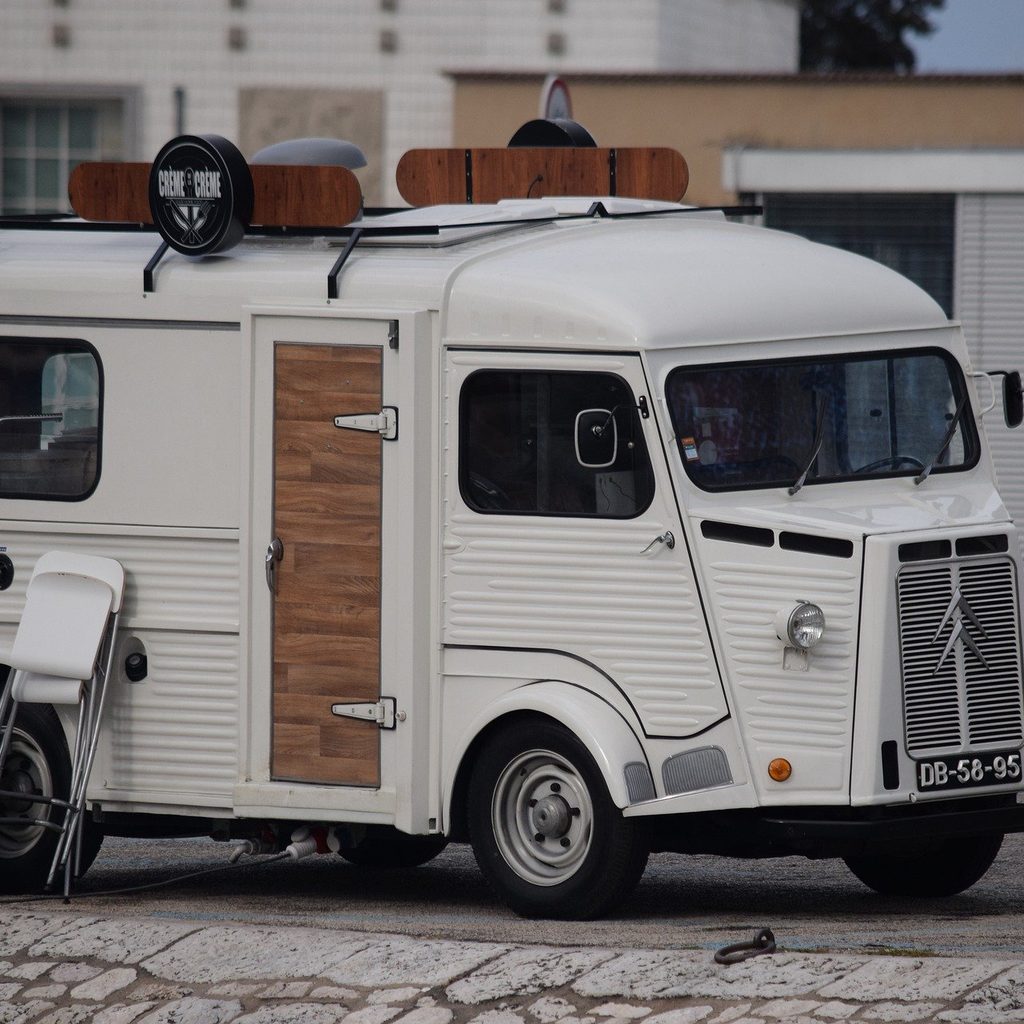
How do you fill a food trailer with water?
Knowing how and where to clean your food truck water system is as important as where to fill it. You already know commissaries are a worthwhile investment for long-term rental and ease of business operation. If you don’t have the funds to rent a commissary or lack a space like this near you, there are other options.
Fill directly from a water hose
Suppose you have the space at your home or wherever you food prep, consider filling your water tank directly from a hose. You can add filters to remove minerals or other additives the city may introduce (i.e., fluoride).
Whenever you use a garden hose, connect directly to the water inlet. Make sure the shutoff valve inside the food truck is closed while filling the tank. Also, ensure the water pump is off since you’re tapped into the hose line instead.
Use water from the freshwater tank
If you don’t have a hose or you plan to use water from a water tank instead, make sure it’s full first. Close any shutoff valves to avoid leaks or spills. Connect the water pump, ensuring the valve is off to avoid pulling in air and damaging the tank.
The shutoff valve should be off at all times unless you’re refilling the water tank. Make sure the main breakers and the water pump breaker are on.
Standard water tank sizes
The size and shape of the water tank determine the price of filling it. These are important to know for laying out your food truck to simplify prep and clean.
- 10-gallon water tank = 17 by 14 by 10 inch
- 16-gallon water tank = 24 by 15 by 10 inch
- 21-gallon water tank = 39 by 16 by 8 inch
- 30-gallon water tank = 34 by 18 by 12 inch
- 42-gallon water tank = 39 by 18 by 14 inch
- 65-gallon water tank = 37 by 30 by 15 inch
- 70-gallon water tank = 34 by 23 by 23 inch
Concluding thoughts
As a food truck business owner, you need a water tank for dishwashing, handwashing, food prep, sanitization, and more. Your next decision is how you’re going to fill it and/or set it up, whether that’s at a commissary, a hose you can use elsewhere, or by some other means. It’s also important you clean your food truck water system on a regular basis to keep the water clean and bacteria-free.


