
When most people think about what a construction worker may wear on the job site, many envision a worker with a tool belt. Others may visualize a bright-colored vest and a hard hat as part of their everyday uniform. While a tool belt, vest, and hardhat are an integral part of a construction worker’s attire, it is not the only clothing item that is recommended for construction workers to wear on a job site. There is more involved in a construction worker’s clothing options, much of which has the crucial safety component in mind. Accordingly, let’s go through some of the different types of clothing items for construction workers to wear on the job that will keep them safe and protected.

Types of clothing construction workers wear
Clothing that protects the head and neck
When people often think about clothing protection for construction workers, the first thing that comes to mind is a hard hat. A hard hat or a helmet should be necessary when using heavy machinery to avoid falling debris. You’ll still want to check them regularly for any dents, cracks, or wear and tear that can hinder the purpose of its protection.
While a hard hat or helmet is an integral part of a construction worker’s attire, it is not the only item to consider for head and neck protection. In addition, if you want proper head and neck protection for your construction workers, make sure to include other weather-related clothing protection, such as a cooling towel for warmer months and a neck gaiter for cooler months at a job site.
Clothing attire worn for body protection
Clothing for construction workers to wear on the job will be at the primary discretion of the job site foreman and contractors, and many different types can be required of the worker. However, some of the common types of clothing workers wear include shirts, vests, pants, and jackets that can withstand tearing and ripping while keeping you safe in all project and weather conditions.
Construction workers will want to wear lighter-weight fabric materials to keep your body cool and from overheating in the summer months. In addition, workers want to ensure they also have compression-based pants and shirts as well as insulated pants and jackets to keep the body warm in cold or cooler months. Let’s also not forget the visibly bright colored vests, as these are essential on the job site that regularly sees construction equipment and machinery moving around. Staying visible can keep you protected on the job site.
Clothing items for proper hand protection
Hand protection on a construction project site is necessary for any construction worker. Ideally, gloves are going to be the best choice of clothing protection for a worker. Depending on the type of materials being handled and worked with, workers will need to invest in several different types of gloves selections. Some of the types of gloves to invest in from proper hand protection are liquid-resistant gloves, fabric, leather, or even rubber gloves depending on the materials and weather conditions of the project timeframe. Good hand protection is essential to help protect hands from significant injuries while handling large objects or equipment.
Footwear focused on safety
Construction workers spend a majority of their workday standing or moving around. Therefore, wearing practical work boots can protect their feet from potential hazards such as crushing materials, punctures, or slippery areas. Depending on the job site, construction workers may be required to wear either simple plain toe work boots, safety toe, or steel toe boots. It is also regularly recommended that closed-toed shoes are required when operating on construction job sites.
Eyewear is essential to protect eyesight
Eyewear protection is essential, especially when working with a heavy amount of wood and metal. For proper eyewear protection, you will want to invest in the appropriate safety of both your face and eyes during construction projects on a job site. Let’s review some of the standard options for protective eyewear for construction workers:
- Face shields are ideal when exposed to any potential impact of falling debris that could damage your face and eyes while working.
- Safety goggles are necessary when large particles, objects, dust, and debris circulate throughout the construction job site. Goggles allow for a tightened fit around the eyes to avoid harm to the eye.
- Safety glasses are essential in less hazardous items on the job site and protect the immediate area around the eyes.
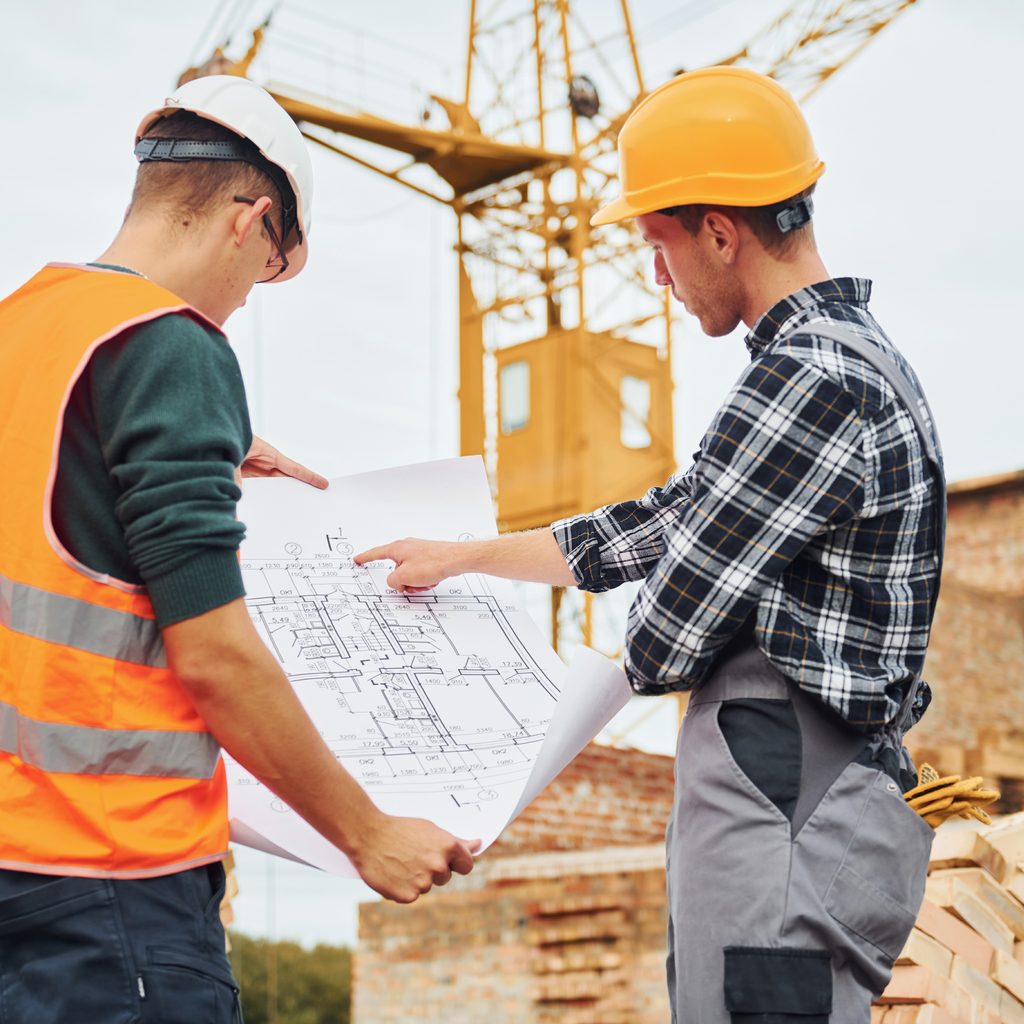
Construction worker safety goes beyond just equipment and machine handling. It also involves the type of clothing workers wear to protect themselves from the elements and hazards on the job. Ensuring that workers wear clothing items with protection in mind should not only be a necessity but should also be mandatory.