
In case you don’t know the story of WeWork, it’s a company with a meteoric rise and fall. Once valued at $47 billion, WeWork was also known as The We Company. Those who watched the company’s development, its early success, and its ultimate downfall have pointed out the warning signs they saw in hindsight. The company’s controversial and sometimes reckless leader, Adam Neumann, usually gets named as the biggest red flag of all.
WeWork was founded in 2010 and initially was pitched as a place where freelancers, startup executives, and employees could find community in person. It was sort of like a business-focused social-media network in which you took part in real life. It was cool. There was a tradeoff between work and play. Employees worked long hours, but they also got to go to glamorous parties and enjoy excellent benefits unheard of in other workplace environments.
Before WeWork’s fall, Neumann had built the company to the point that it had over 50 locations and had created interesting-sounding spinoffs of the original concept with “WeLive” apartment complexes, “WeGrow” schools, and a gym called “Rise by We.”
Neumann had a plan to take WeWork public, but his behavior revealed in company documents and several controversies involving female employees caused the company to take an almost immediate nosedive.
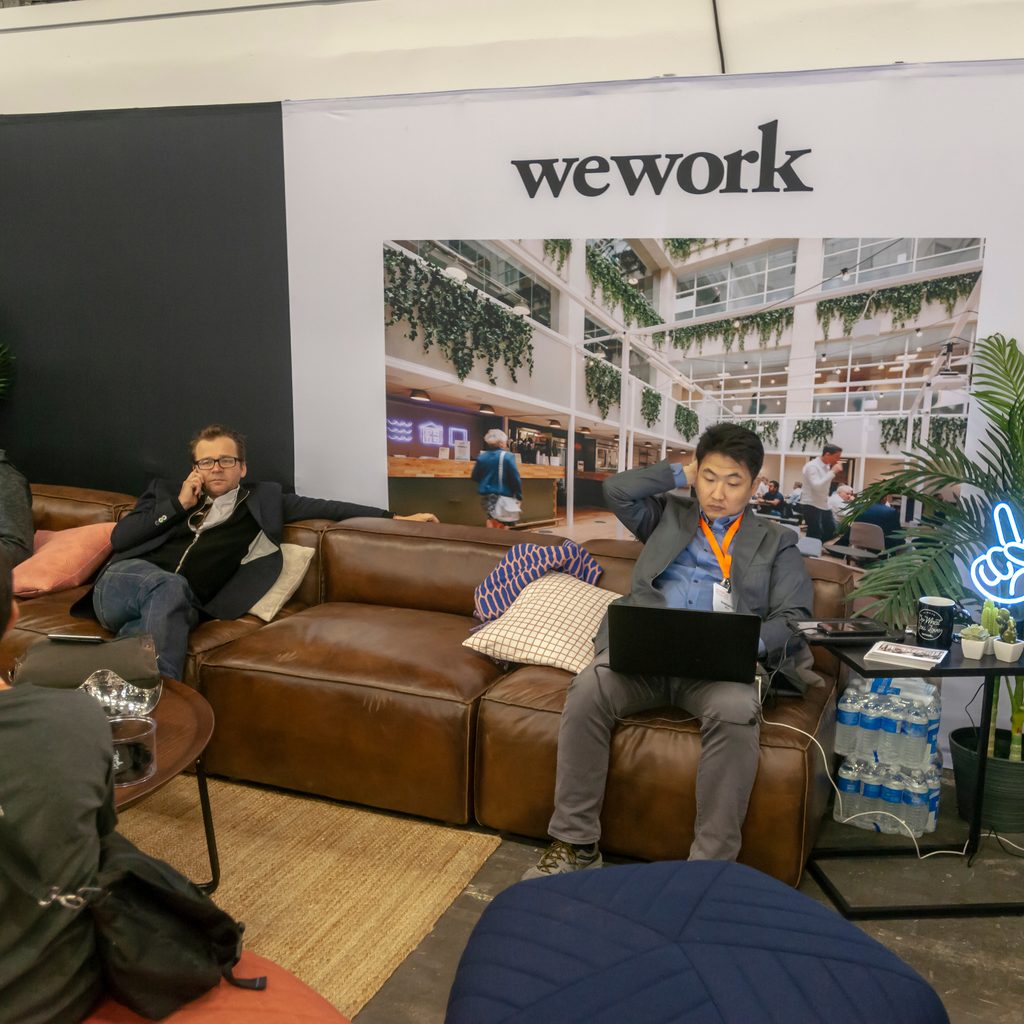
What happened to WeWork?
WeWork had attempted an initial public offering (IPO), but then everything collapsed when the company released paperwork filed with the U.S. Securities and Exchange Commission (SEC). That paperwork went into detail on the risk factors the company faced. Interestingly, up to 10 pages discussed the risk Neumann posed due to behavior that violated the IPO requirements for a quiet period.
For those who don’t know, according to Investopedia, “Prior to a company’s initial public offering, the quiet period is an SEC-mandated embargo on promotional publicity. This prohibits management teams or their marketing agents from making forecasts or expressing any opinions about the value of their company.”
Almost overnight, the value of WeWork went from $47 billion to just $10 billion. Neumann’s oldest investor, a Japanese company called SoftBank, jumped in to save WeWork at the last moment. However, SoftBank valued WeWork at only $8 billion and took an 80% stake in the company and at the same time forced Neumann to step down as its leader.
A Major lesson learned
Perhaps you’ve heard the term “too big to fail.” Masayoshi Son, chairman and CEO of SoftBank, initially believed that WeWork was on a path to the stars. It couldn’t fail. That’s a mistake, and a lesson learned in the case of WeWork.
Why was Son’s outlook a mistake? Because the deal made with Neumann, in the beginning, allowed him to retain an incredible amount of power over his startup with virtually no checks on his behavior. No matter how badly WeWork was run, Neumann could do what he wanted and get away with it. Son’s contract with Neumann would have cost SoftBank dearly if Son had breached it. By agreeing to such a contract, it showed that Son placed an inordinate amount of faith in Neumann’s ability to deliver.
The mistake is that history shows that only one in 10 venture capital (VC) deals become successes that endure. Ninety percent fail. Of course, there is much variation in success rates depending on such things as the type of company, the investment size, and how willing the public is to buy shares when the company decides it wants to put out an IPO.
Ensure control of the company
There should have been provisions within the investor’s agreements to make sure that control of WeWork could be seized from Neumann if fundamental milestones were missed. Although the company had the appearance of doing well on the surface, a little digging would have provided a clear picture.
For example, milestones investors could have set with Neumann could have targeted major cities in the USA for completely profitable operations. The company could then have followed up with select cities internationally.
However, Neumann had no such provisions placed upon him, and he grew the company at a record pace without ensuring that the company was profitable in any individual market. The result was a gigantic company that didn’t make money.

Owning up
Be humble. That’s a lesson Neumann should have learned but apparently didn’t. Following his apparent fall from grace, he still walked away with almost $1.7 billion. (Son agreed to pay Neumann that amount to step down from his leadership position.) Since then, Neumann has lost a bit of that money, but Forbes magazine still lists his net worth at about $750 Million, and an account in Vanity Fair suggests he sees himself as something of a martyr.
Meanwhile, SoftBank’s Masayoshi Son at least owned up to his mistake in providing Neumann with such incredible leeway. He publicly apologized.
Which of these two businessmen do you think retains the better reputation?